Cherry Hill Emergency Roof Repair & Storm Damage Restoration
Rapid emergency telephone triage connecting Camden County residential and commercial property owners with verified local roofing professionals for active leak mitigation and storm tarping.
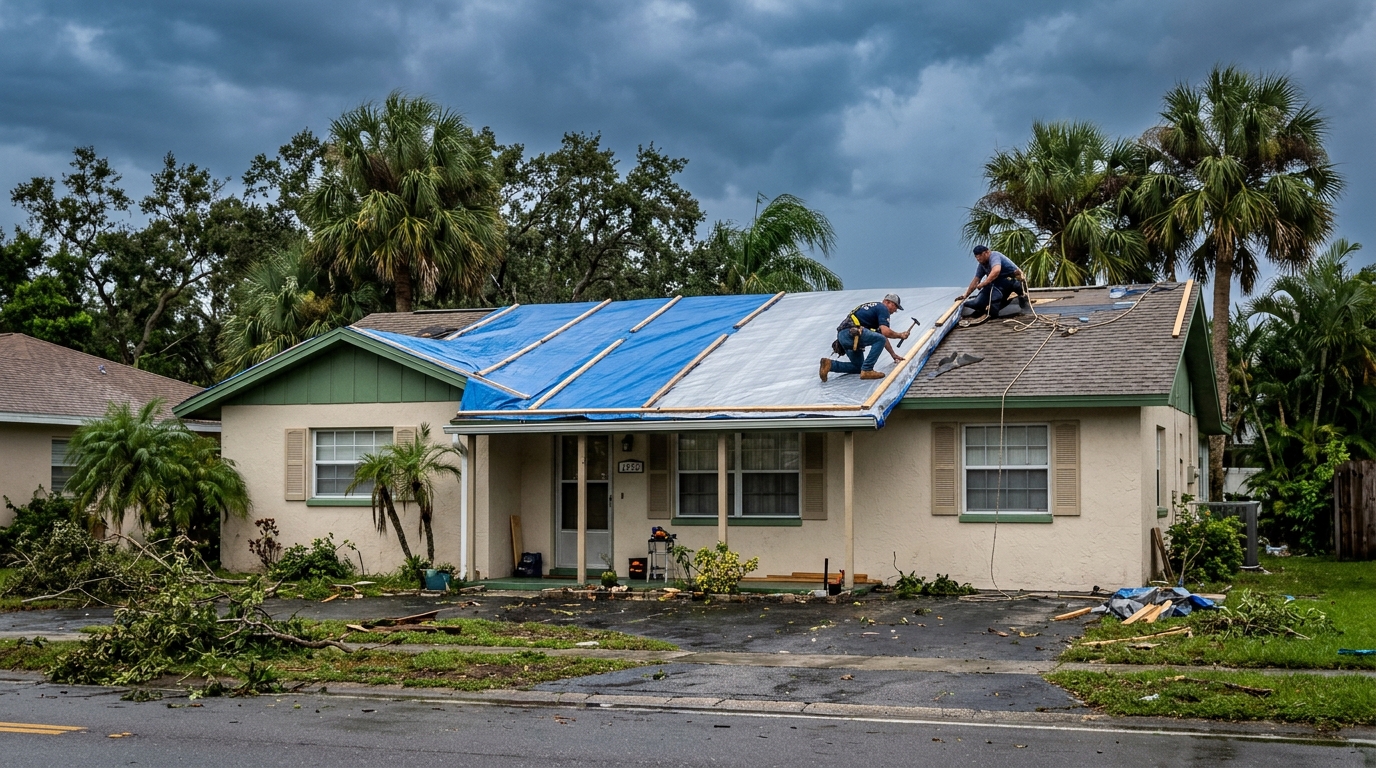
Cherry Hill & South Jersey Coastal Storm Microclimate
Situated directly across the Delaware River from Philadelphia, Cherry Hill represents a key residential and commercial center of South Jersey. The township features expansive residential developments—including Barclay Farm, Kingston Estates, and Cherry Hill East—alongside bustling commercial retail corridors along Route 70 and Route 38.
Cherry Hill properties face severe Atlantic Nor'easters and maritime squalls moving inland from the Jersey Shore. Mid-century ranch homes and contemporary two-story colonials frequently experience wind shear that creases architectural laminate shingles, lifts aluminum drip edges, and tears rubber membranes on flat patio additions and commercial strip centers.
When intense coastal storms bring 50+ mph winds and driving rain, water penetrates beneath compromised shingles and backs up behind leaf-filled gutters. Emergency dispatch connects Cherry Hill property owners with licensed New Jersey Home Improvement Contractors (NJ HIC) equipped for rapid high-wind tarping, EPDM rubber seam patching, and immediate active leak containment.
1. Microclimate Dynamics & Severe Storm Stresses in Cherry Hill
Property owners in Cherry Hill face the severe climatic stresses of the greater Delaware Valley. In Camden County, NJ, continental winter freezes alternate with sudden thaw cycles and torrential Nor'easter downpours. High-velocity coastal winds create aerodynamic uplift forces across eaves, ridges, and low-slope roof parapets.
When sustained winds exceed 50 mph, aged asphalt shingles and brittle roofing adhesives shear at fastener lines. On flat roofs, wind creates negative pressure pockets that lift unbonded EPDM seams or blistered modified bitumen sheets. Once the waterproof membrane is breached, driving rain penetrates underlying wood decking, causing rapid rot and ceiling damage.
2. FLIR Infrared Moisture Diagnostics & Forensic Evaluation
Following a severe storm in Cherry Hill, locating the precise point of water intrusion requires non-destructive scientific testing. Water entering a damaged roof flashing or unsealed membrane seam often tracks along structural roof joists before emerging in living areas dozens of feet away.
Responding technicians deploy high-resolution forward-looking infrared (FLIR) thermal cameras. By reading subtle temperature differences caused by evaporative cooling in damp insulation and saturated wood decking, FLIR cameras map exact moisture migration boundaries. Technicians verify findings with calibrated electronic pinless moisture meters to assess moisture levels in rafters and drywall without damaging interior finishes.
3. Structural Substrate Restoration & Carpentry Methodology
When roof sheathing or framing has suffered water damage, a durable restoration requires systematic carpentry and membrane engineering:
- Safety Stabilization & Hazard Containment: Fall arrest lines are secured to structural anchor points, and temporary weatherproofing shields are positioned to safeguard the structure during restoration.
- Selective Demolition: Damaged, buckled, or mold-contaminated plywood or tongue-and-groove decking is excised back to the sound centerlines of adjacent roof joists using depth-calibrated saws.
- Joist & Rafter Inspection: Structural framing is inspected for rot or deflection. Compromised joists are sistered with structural-grade dimensional lumber secured with heavy-duty structural bolts.
- Substrate Panel Replacement: APA-rated 5/8-inch or 3/4-inch CDX exterior-grade plywood panels are installed with hot-dipped ring-shank nails spaced 6 inches on center along panel edges and 12 inches on center across intermediate supports. H-clips are placed between unsupported panel edges.
- High-Temperature Underlayment: Self-adhering SBS modified rubberized asphalt ice-and-water barrier is applied directly to the bare wood deck, sealing completely around nail penetrations.
- Finish Material Re-Integration: Matching architectural shingles, standing seam metal panels, or low-slope modified bitumen membranes are layered into existing courses following strict Pennsylvania high-wind fastening schedules.
4. State Contractor Licensing & Building Code Compliance in Camden County, NJ
All emergency stabilization, tarping, and permanent roofing restorations in Cherry Hill must adhere strictly to Pennsylvania and New Jersey state regulatory frameworks. In Pennsylvania, residential roofing contractors must be registered under the Pennsylvania Home Improvement Consumer Protection Act (HICPA), carrying an official PA HIC registration number on all estimates and contracts. In New Jersey (for Cherry Hill), contractors must hold an active Home Improvement Contractor (NJ HIC) license issued by the New Jersey Division of Consumer Affairs.
Furthermore, local municipal building permits and the International Residential Code (IRC) enforce strict high-wind nailing schedules (requiring six nails per architectural shingle) and mandatory self-adhering ice-and-water shield membranes along eaves, valleys, and critical wall transitions to prevent winter ice dam backup.
5. Seasonal Property Maintenance & Severe Storm Preparedness
Proactive maintenance protects Cherry Hill properties against severe storm damage:
- Tree Canopy Management: Maintain a minimum 10-foot clearance between tree branches and roof edges to prevent branch abrasion and impact punctures during storm gusts.
- Drain & Gutter Debris Removal: Clear accumulated leaves and debris from gutters, internal drain hoppers, and scuppers to prevent water pooling and damming during torrential downpours.
- Penetration Collar Inspection: Inspect rubber plumbing boot flashings and chimney counter-flashings bi-annually, replacing weathered rubber collars before active leaks penetrate living areas.
- Post-Storm Attic Checks: Following any severe Nor'easter or summer thunderstorm, inspect attic cavities with a high-lumen flashlight to identify damp insulation, water stains on underside decking, or daylight visible through roof transitions.
Immediate Dispatch in Cherry Hill
Experiencing an active roof leak or storm damage? Speak directly with our dispatch triage desk at (888) 208-4155. We connect you with independent, licensed local roofing specialists ready to protect your Cherry Hill property.