Emergency Roof Leak Repair & Active Water Intrusion Mitigation in Philadelphia, PA
Rapid 24/7 telephone dispatch connecting rowhouse owners, historic property stewards, and commercial managers across Philadelphia with qualified local emergency roofing crews.
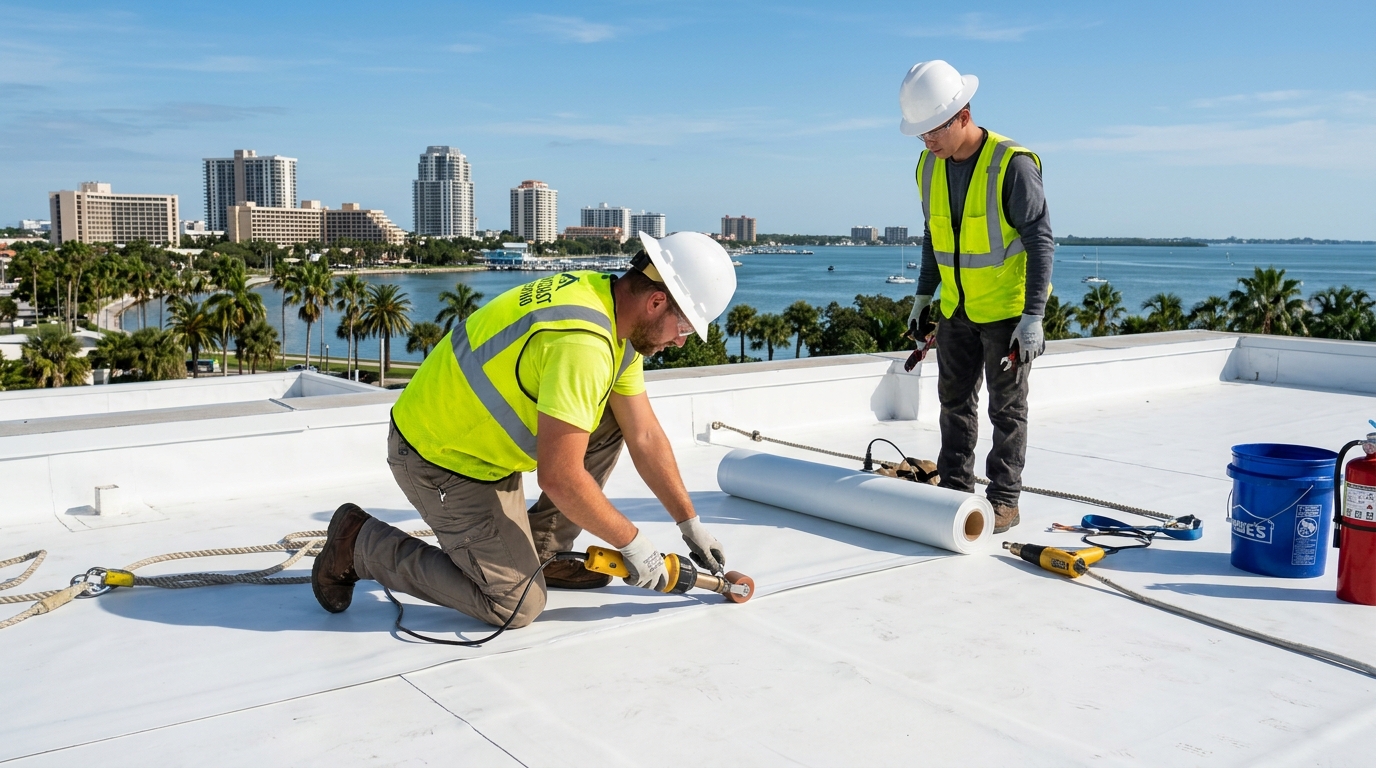
Active Water Intrusion Dynamics in Philadelphia Rowhouses
An active roof leak in a Philadelphia brick rowhouse or commercial property is an immediate structural crisis. Dense urban party-wall construction and low-slope roof geometries mean that water rarely falls straight down. Instead, precipitation driven by cold Atlantic Nor'easters or sudden summer deluges penetrates through hairline cracks in aged asphalt coatings, split EPDM rubber lap seams, or deteriorated brick parapet mortar.
Once inside the building envelope, water travels horizontally along continuous dimensional lumber roof joists that span between shared party walls. Moisture pools over historic plaster-and-lath ceilings, saturates fiberglass or rockwool insulation cavities, and eventually emerges through crown molding, recessed light fixtures, or second-story bedroom walls—often dozens of feet from the actual external roof breach.
Emergency dispatch provides instantaneous connection to experienced Philadelphia emergency roofing mechanics. Field crews arrive equipped with specialized hydrophobic mastics capable of bonding directly to wet EPDM, modified bitumen, or metal surfaces under ongoing rainfall, accompanied by interior water-diversion funnels to protect hardwood flooring, historic woodwork, and living spaces.
1. Regional Microclimate Dynamics & Nor'easter Storm Exposure in Philadelphia
Philadelphia's geographical location in the mid-Atlantic transition zone exposes property owners to diverse and severe weather dynamics. Continental polar air masses descending from Canada frequently collide with warm, moisture-rich maritime air masses surging northward from the Atlantic Ocean along the Delaware River basin, generating intense Nor'easter storm systems.
These coastal low-pressure systems produce sustained gale-force winds of 50 to 70+ mph, torrential driving rains, and heavy wet snow accumulations. On Philadelphia's dense brick rowhouse blocks, wind flow is channeled through narrow street canyons, creating powerful aerodynamic suction vortices over flat roof surfaces, rear extensions, and party wall parapets. When roof membranes, flashings, or drainage scuppers suffer from age-related fatigue, these extreme wind pressures peel back protective layers, allowing wind-driven moisture to penetrate deep into structural attic joists.
2. Non-Destructive Moisture Diagnostics & FLIR Thermal Tracing
Pinpointing the precise origin of a leak in a historic Philadelphia rowhouse requires sophisticated diagnostic technology rather than invasive guesswork. Water frequently enters through a cracked party wall coping stone or a separated flashing reglet at the front of a rowhouse, only to travel along joists before dripping through a rear kitchen ceiling.
Responding contractors deploy advanced forward-looking infrared (FLIR) thermal imaging cameras. Operating on high-sensitivity thermal sensors, FLIR cameras detect microscopic temperature differentials (delta T) caused by the evaporative cooling of wet insulation and saturated wood substrates. Technicians combine thermal scans with calibrated electronic pinless moisture meters to map moisture boundaries inside ceilings and walls without destructive exploratory cuts.
3. Step-by-Step Substrate Restoration & Structural Repair Methodology
When chronic water intrusion has compromised structural roof decking and party wall framing, a durable restoration requires systematic carpentry and membrane engineering:
- Site Safety & Temporary Containment: Fall arrest lines are secured to structural anchor points, and temporary protective weatherproofing is deployed over vulnerable areas during restoration.
- Selective Demolition: Saturated, delaminated, or rotted wood decking is excised back to the sound centerlines of adjacent roof joists using depth-calibrated saws to avoid damaging underlying ceiling plaster.
- Joist & Party Wall Inspection: Exposed dimensional lumber joists and brick party wall pockets are inspected for fungal rot or termite damage. Compromised joists are sistered with structural-grade lumber secured with structural framing bolts.
- Substrate Panel Replacement: APA-rated 5/8-inch or 3/4-inch CDX exterior-grade plywood panels are installed with hot-dipped ring-shank nails and H-clips to prevent panel edge deflection under snow loads.
- High-Temperature Underlayment & Insulation: High-density polyisocyanurate (polyiso) insulation boards with tapered crickets are installed, followed by self-adhering SBS modified rubberized asphalt membranes.
- Finish Membrane Re-Integration: High-grade EPDM synthetic rubber or multi-ply torch-down modified bitumen membranes are layered into existing courses, with all lap seams bonded using commercial adhesive tapes or hot-air welds.
4. State Energy Codes & Philadelphia L&I Licensing Compliance
All emergency stabilization, tarping, and permanent roofing restorations in Philadelphia must adhere strictly to Pennsylvania state and municipal regulatory frameworks. Within the City of Philadelphia, contractors must hold an active Contractor License issued by the Department of Licenses and Inspections (L&I) and carry current commercial general liability and workers' compensation coverage.
In suburban Pennsylvania communities across Montgomery, Delaware, and Bucks Counties, contractors must be registered under the Pennsylvania Home Improvement Consumer Protection Act (HICPA). Furthermore, re-roofing projects that remove existing roof coverings down to the deck must comply with the 2021 International Energy Conservation Code (IECC) and International Residential Code (IRC), mandating appropriate continuous insulation values (minimum R-30 for low-slope roofs) and proper ventilation to prevent interior moisture condensation.
5. Preventative Property Maintenance & Storm Preparedness
Proactive maintenance protects Philadelphia rowhouses against severe Nor'easter damage:
- Drain Hopper & Scupper Clearance: Inspect and clean rear roof drain hoppers, conductor heads, and exterior downspouts bi-annually. Clear accumulated city street dust, leaves, and debris to prevent hydrostatic water backup.
- Parapet Coping & Mortar Checks: Examine brick party wall parapets every spring and autumn. Look for cracked mortar joints, loose coping stones, or pulling counter-flashings before winter freeze-thaw cycles begin.
- Membrane Seam & Flash Inspections: Inspect EPDM rubber splice joints, pipe boot collars, and skylight perimeter flashings. Reseal aging lap joints with elastomeric mastics before wind-driven rain penetrates the building envelope.
- Post-Storm Attic & Ceiling Reviews: Following severe Nor'easters or summer thunderstorm fronts, inspect attic cavities and upper-floor ceilings with a flashlight to detect early moisture stains before drywall or plaster collapses.
Need Emergency Roofing Assistance in Philadelphia?
Do not let active water leaks ruin your historic plaster ceilings or structural party wall framing. Connect immediately with our 24/7 telephone triage desk to dispatch independent licensed roofing professionals to your property.